
1. First, Check the Material Quality of PVC Spray Hose
The core of a high-quality PVC spray hose lies in its material—focus on these points:
Thickness of PVC layer
Pinch the PVC spray hose gently. A good one has a thick, uniform PVC outer layer that doesn’t feel flimsy. Thin PVC wears out fast, especially when used for outdoor spraying.
Reinforcement layer
Look for PVC spray hoses with internal reinforcement. Reinforcement prevents the hose from collapsing under spray pressure and stops it from kinking easily. And this is critical for consistent water flow.
Flexibility
Bend the PVC spray hose at a 90-degree angle. A high-quality one stays flexible without cracking or retaining a fold. Avoid stiff PVC spray hoses—they’re hard to maneuver and prone to breaking.
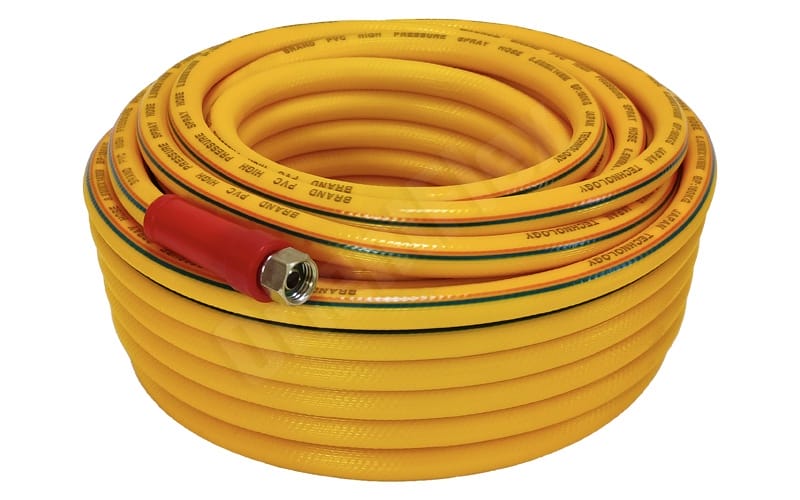
2. Verify Key Specs to Match Your Spraying Needs
Specs determine if the PVC spray hose works for your tasks—don’t skip these checks:
Pressure rating
Check the label for the PVC spray hose’s max pressure. For home use, choose one rated 80–120 PSI. For industrial use, go for 150+ PSI to avoid bursts.
Length and diameter
Pick the right length based on your space. 10–20 feet for small gardens and 25–50 feet for large yards. The diameter should be 1/2-3/4 inch. Smaller diameters save water for light spraying, while larger ones deliver more flow for heavy-duty tasks.
Temperature resistance
Ensure the PVC spray hose handles your environment. A good one works safely from 0℃ to 60℃. This means it won’t crack in cold weather or soften in hot sunlight.